Marketing vehicles do something a billboard cannot: they move to where your audience already is, and people can walk up to them.
Whether you are launching a product, running a mobile tour, or trying to stand out in a crowded market, a branded vehicle gives a campaign flexibility, visibility, and a physical presence. From food trucks and tuk tuks to glass trucks and vintage builds, they are the format brands reach for when a screen is not enough.
Getting the most out of one takes more than a striking wrap. Here are five things that decide whether a vehicle campaign works.
Key Takeaways
- The vehicle should follow the goal: a sampling truck, a demo showroom, and a display build are three different jobs, and the wrong choice limits everything after it.
- Design for function, not just impact: the interior layout decides whether people can actually do what you brought them there to do.
- Know who you are parking in front of: location and audience matter as much as the build, since foot traffic alone is not the same as the right foot traffic.
- Tailor the experience to the brand: generic activations get walked past, and the details are what make people stop and stay.
- Plan the digital extension upfront: the people who see the campaign online will always outnumber the people who see it in person.
What Is a Marketing Vehicle?
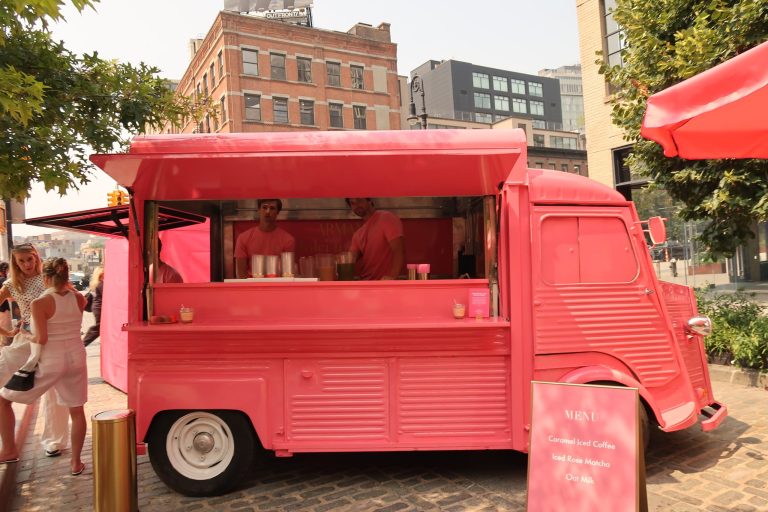
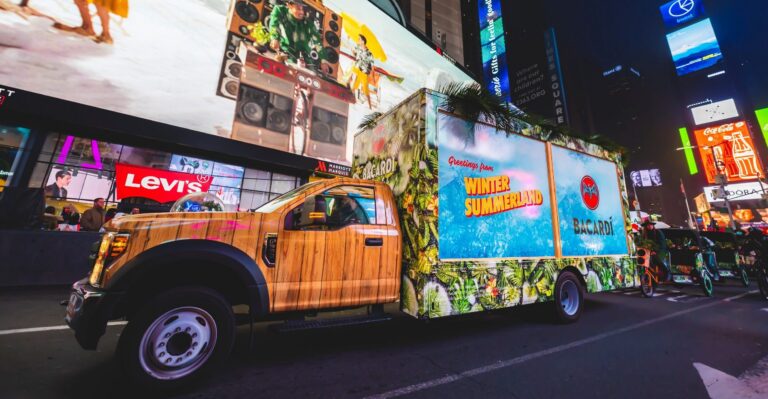
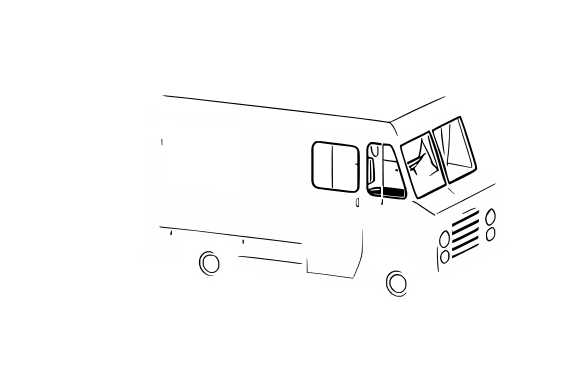
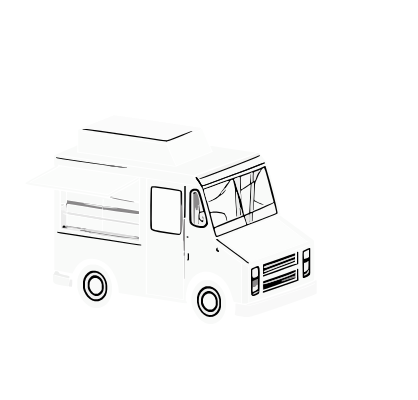
A marketing vehicle is a branded truck, cart, trailer, or van converted into a mobile brand environment. Rather than advertising a product, it brings the product to the customer, functioning as a pop-up shop, sampling station, demo space, or showroom that can move between locations.
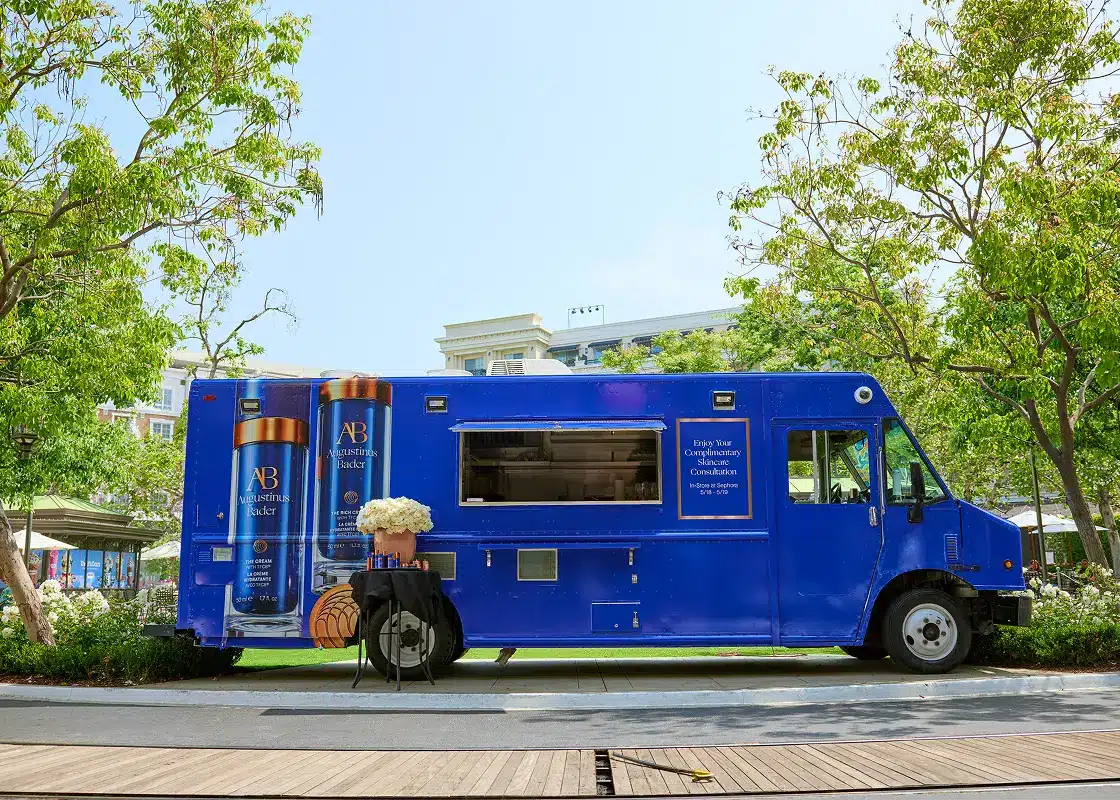
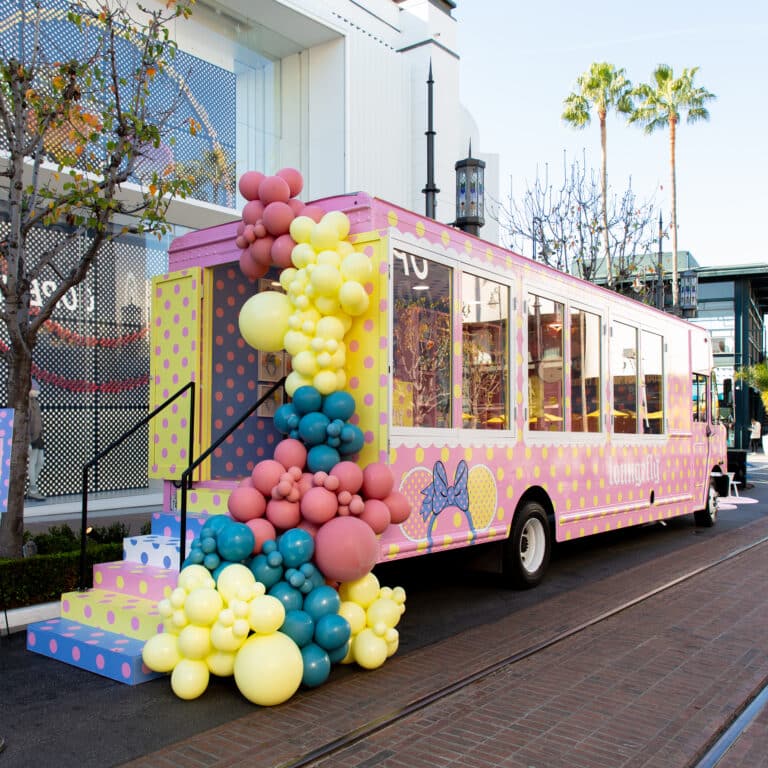
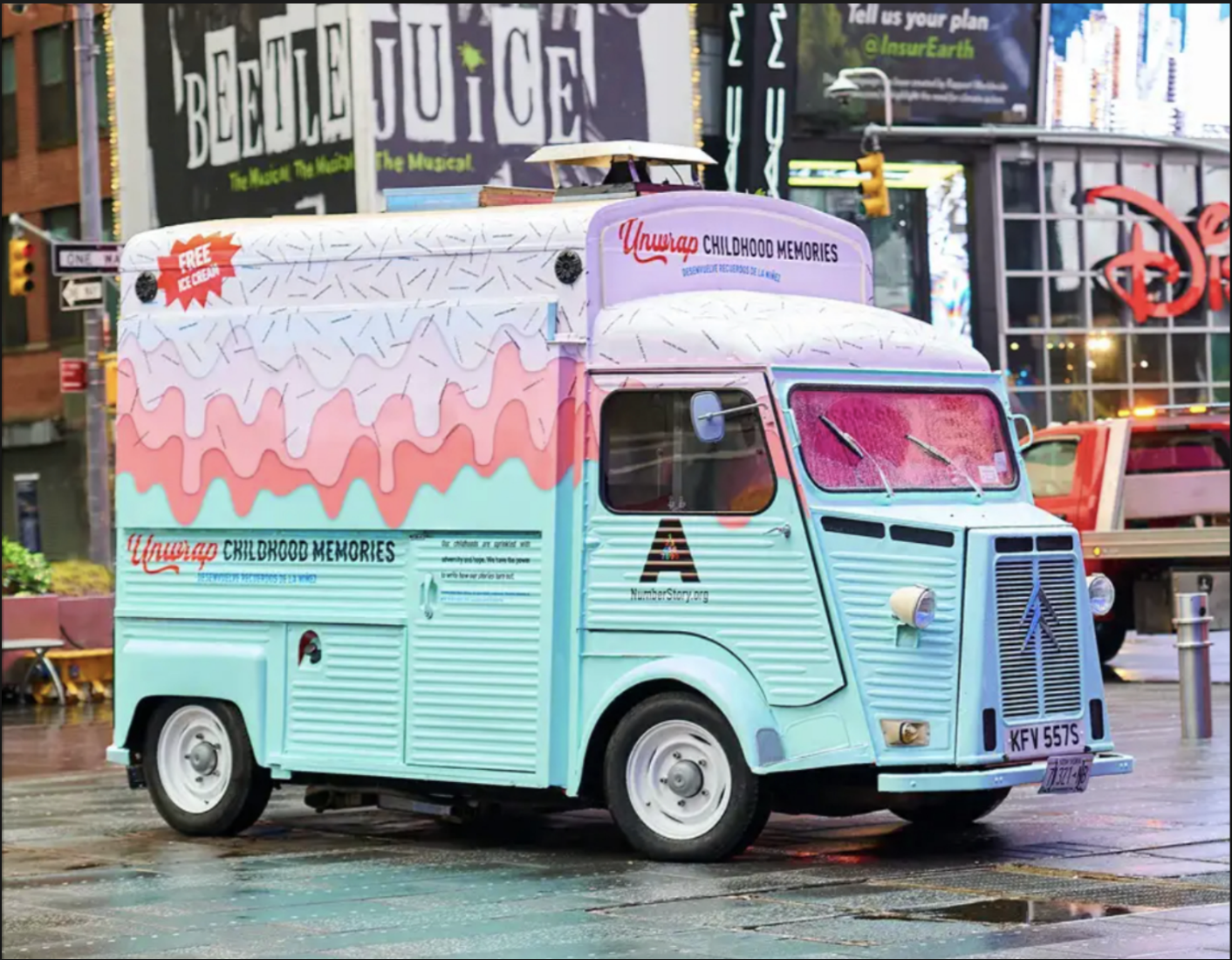
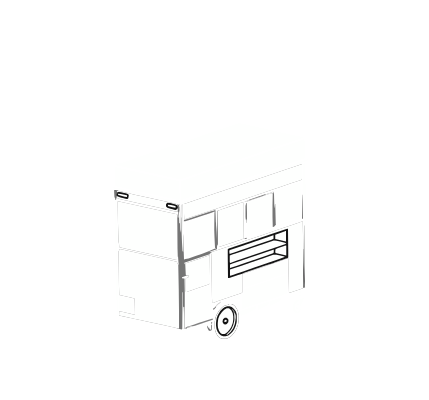
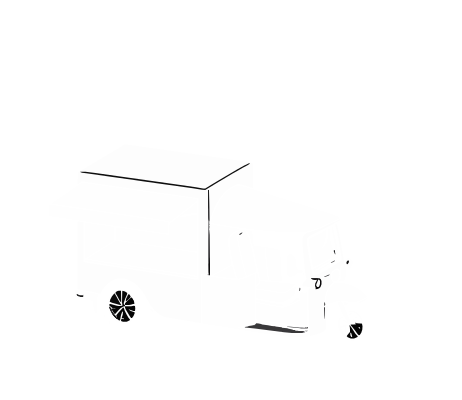
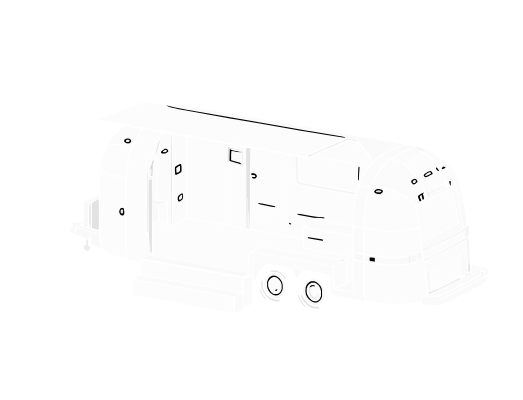
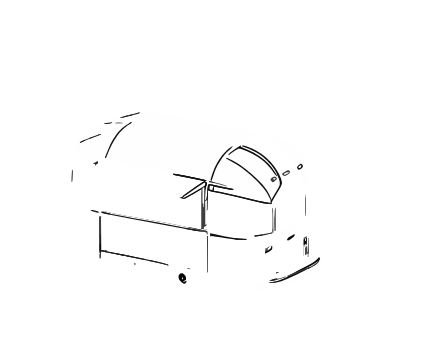
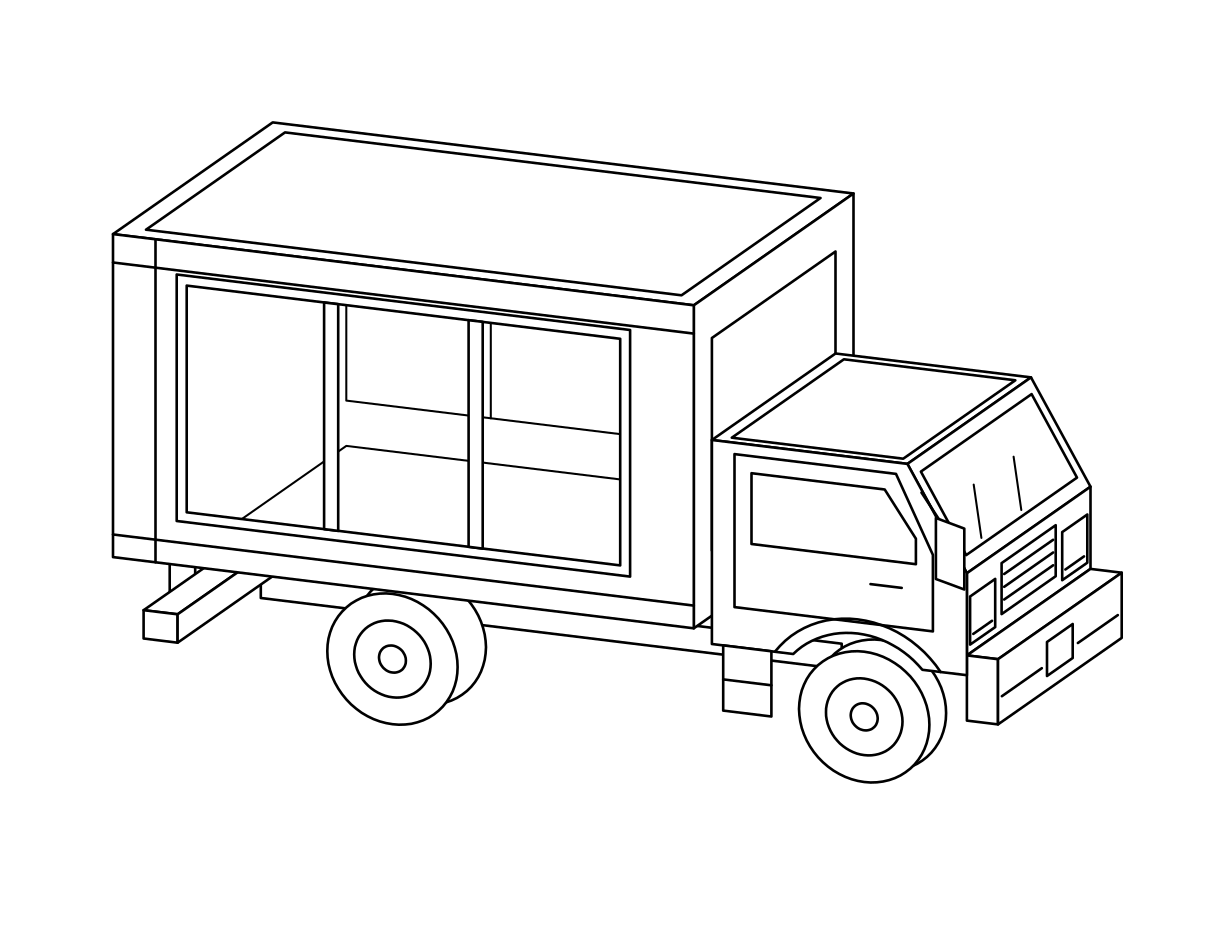
The category covers food trucks, food carts, tuk tuks, Airstreams, vintage Citroens, and glass trucks, each suited to a different kind of campaign. You can see the full range on our experiential vehicles page.
Why Brands Keep Choosing the Street
Physical advertising is not in decline, which surprises people. Out of home advertising revenue reached a record $9.46 billion in 2025, growing 3.6 percent year over year and extending the industry’s run to nineteen consecutive quarters of growth. Transit was the fastest-growing segment for the second year running, up 9.2 percent.
Performance data explains the spending. Research from the OAAA and Kochava released in 2026 found out of home campaigns delivered a median lift of 20 percent for in-person outcomes and 14 percent for digital outcomes, roughly twice the performance lift of broadcast and streaming television.
How to Choose the Right Marketing Vehicle
A marketing vehicle takes that principle further than a static placement can. A billboard waits to be driven past. A vehicle drives to the audience, and then people can touch what you are selling.
1. Choose the Right Vehicle for Your Brand
Not all experiential vehicles are created equal. The build you choose should reflect your brand, your audience, and what the campaign actually has to achieve.
- A sleek trailer suits a technology brand showcasing new hardware, where dwell time matters more than throughput.
- A retro vintage vehicle creates instant nostalgia for a lifestyle or fashion brand.
- A fully equipped food truck is the workhorse for sampling food or beverage at volume.
- A glass box truck turns the product itself into the advertisement, visible from the sidewalk before anyone reads a word.
- A tuk tuk or cart reaches dense urban blocks a full-size truck cannot park on. The vehicle sets the tone for the entire campaign. If you want to see the options side by side, our guide to choosing a marketing vehicle breaks down the decision, and you can build a version of your own in Merlin AI.
2. Design for Impact and Functionality
Your vehicle needs to be eye-catching and practical at the same time, and brands routinely get the first part right and the second part wrong.
On the outside, custom colors, clear branding, and interactive displays capture attention and pull foot traffic. A single saturated brand color reads from a block away, while intricate design only works from a few feet.
On the inside, the layout has to support the objective. Live demos, sampling stations, retail fixtures, and queue flow are all fabrication decisions, not styling decisions. A beautiful build where two staff cannot pass each other during a rush is a design failure, however good the photographs look.
3. Know Your Target Audience
Before you hit the road, define who you are trying to reach. Tech-savvy millennials, busy parents, and local foodies are three different campaigns, and the answer shapes your route, your giveaway, and your messaging.
Analyze past customer data
Purchase history, website analytics, and social engagement reveal patterns in age, interest, and location. That tells you which markets are worth a stop before you commit to a route.
Choose strategic locations
Where you park matters as much as what you park. College campuses reach younger consumers, farmers markets reach families, and food festivals reach culinary audiences. Density and audience match beat raw traffic volume every time.
Talk to people while you are there
Use the vehicle as a listening post. Ask visitors questions, gather feedback, and note what draws them in. Those observations are cheaper than research and more current.
Watch what your audience is already discussing
Hashtags, mentions, and local creators tell you what themes will land before you build around them.
4. Create a Tailored Experience
Generic does not cut it. The experience should reflect your brand’s personality rather than being a neutral space with a logo on it.
A beauty brand might offer mini makeovers in a mobile showroom, as Glossier did with a Cloud Paint activation. A fitness brand might host pop-up workouts from a branded van. A skincare brand touring several cities needs the experience to hold up identically in each one, which is what the LANEIGE x innisfree tour was built to do across twelve stops.
The goal is not decoration. It is giving someone a reason to stop, something to do while they are there, and something to take away.
5. Leverage Social Media and Digital Integration
Your vehicle is a physical presence, and its reach is mostly online. The people who see the campaign in a feed will always outnumber the people who walk past it.
Build the shareable moment into the design rather than hoping for one: a backdrop worth standing in front of, visible handles and a short hashtag, and a QR code that shortcuts to your profile or a sign-up. Our guide to creating experiences that drive UGC covers how to design that deliberately.
Done well, every visitor becomes a distribution channel, and a two-day activation produces content for the following quarter.
Case Study: How a Glass Truck Made Loungefly’s Collection the Ad